
Deck and Fence Cleaning in Gresham, OR
Wood, Composite and the Difference It Makes
Decks are the surface most often damaged by pressure washing, and the damage is usually invisible until the wood dries. A high-pressure tip run along a softwood board tears the fibres and raises the grain. The board looks clean while it is wet, then dries rough and fuzzy, splinters over the following season and takes stain unevenly forever after. Decks in this climate are already vulnerable, because boards that stay damp most of the year are softer than the same wood in a dry region. That is why deck cleaning here runs at low pressure with a cleaning solution doing the work. The algae, the black spotting and the grey surface layer come off chemically, and the pressure is only there to rinse. Composite decking is a different problem again. It does not raise a grain, but the surface can be marked permanently by a concentrated tip, and the growth on composite tends to sit in the embossed texture where a wand pass skims straight over it. Fences follow the same rules as decks, with the added complication that a fence has two sides and a neighbour attached to one of them. We check boards and fixings before starting, because a deck with soft boards or lifted screws needs those addressed rather than pressure-washed around.
If you are planning to stain or seal after the clean, tell us when you book, because it changes the timing rather than the method. Boards need to dry properly before any coating goes on, and in a wet season that is a matter of days rather than hours. We walk the deck first, note anything soft or lifting, clean at the pressure the boards can take, and let you know what condition the wood is genuinely in. On fences we confirm which sides we are cleaning and whether access to the far side is arranged.

What's Included in our Deck and Fence Cleaning service?
Board and Fastener Check
Finds soft boards and lifted fixings before pressure makes either of them worse.
Low-Pressure Wash
Removes algae and greying without raising the grain on wood boards.
Dry-Down for Sealing
Times the clean so boards are dry enough if staining follows the wash.
Proudly serving Gresham, Troutdale, Fairview, Wood Village, Happy Valley and Damascus for years.
Comprehensive Pressure Washing Services in Gresham
Tailored to Your Needs
Every job starts with one question: what can this surface take. Concrete, pavers and stone handle direct pressure and clean up fast with a surface cleaner. Siding, roofing, painted trim and older wood take a low-pressure application instead. Most properties need both methods in different places, which is why we quote by surface.
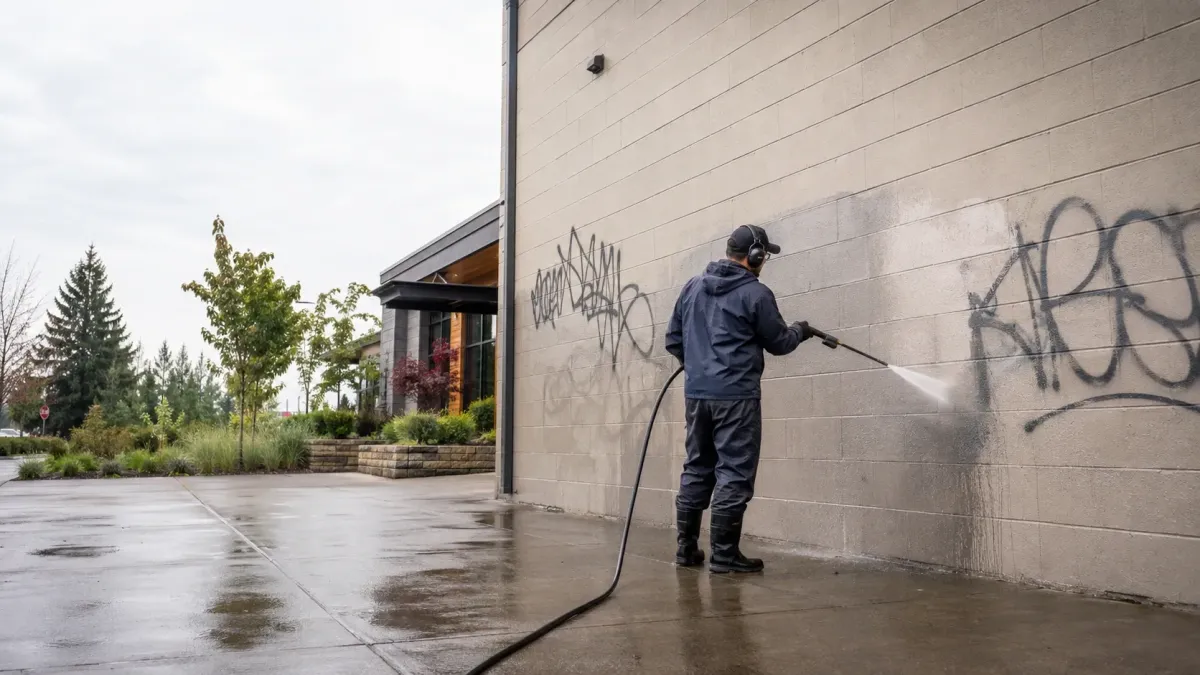
Tag removal matched to the substrate so the wall does not end up two-toned.
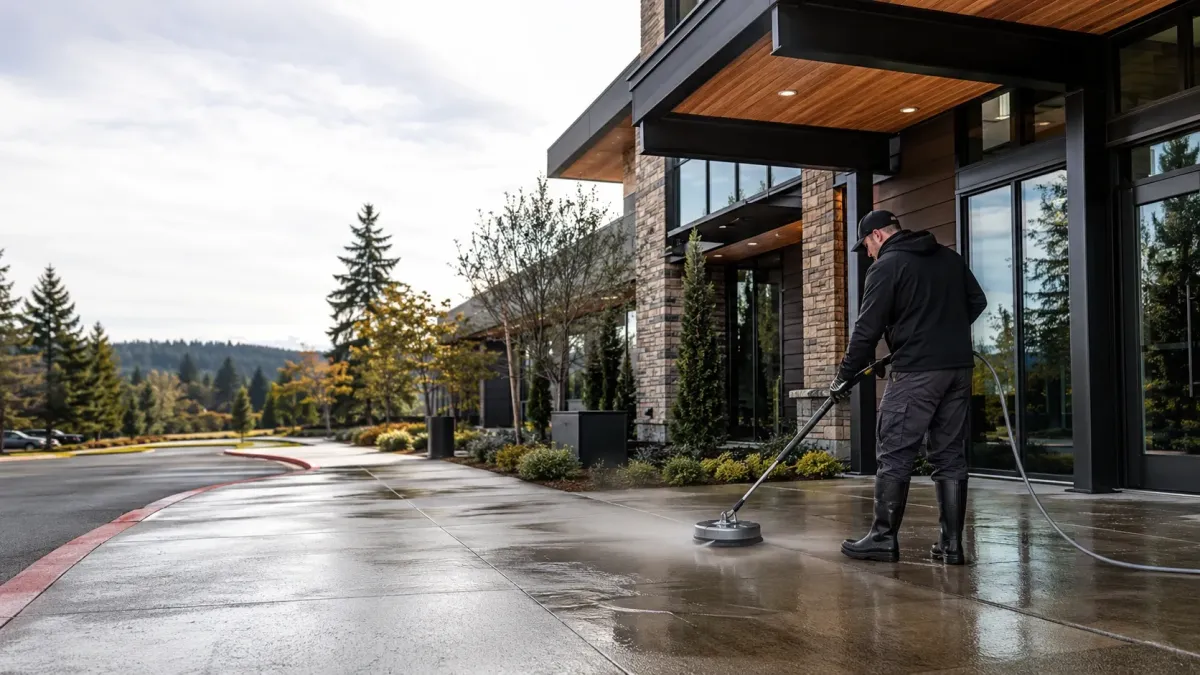
Scheduled exterior cleaning for commercial property, worked around your trading hours.
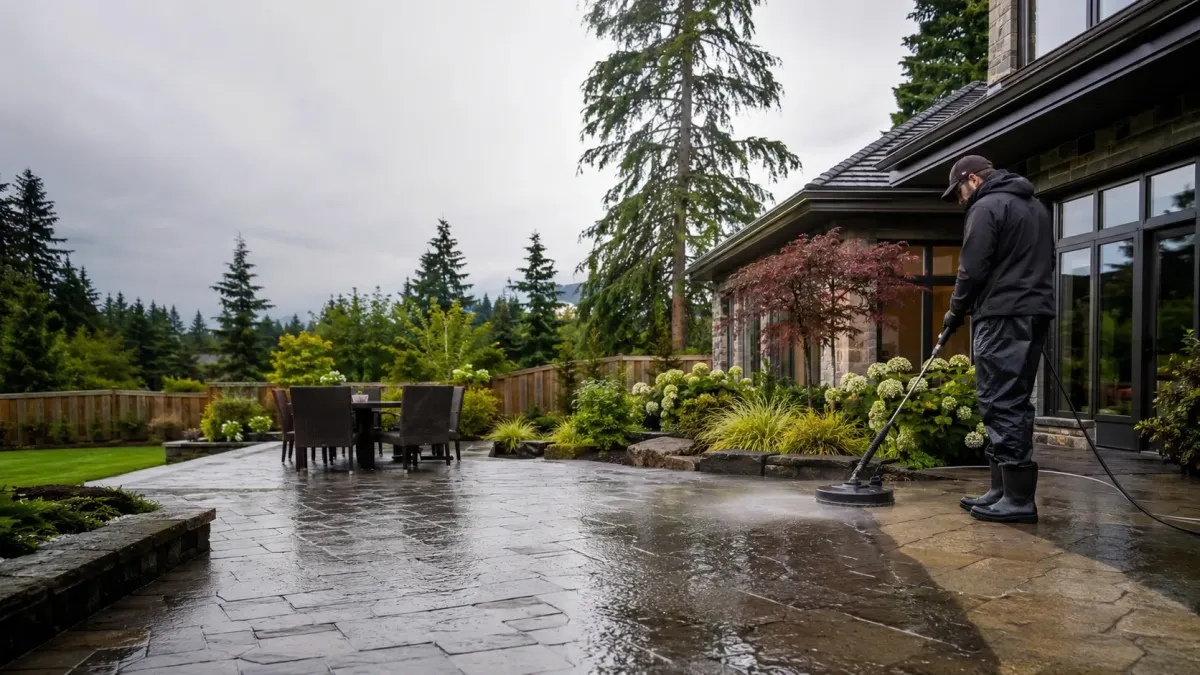
Paver and patio cleaning that clears the joints without washing the bedding out.
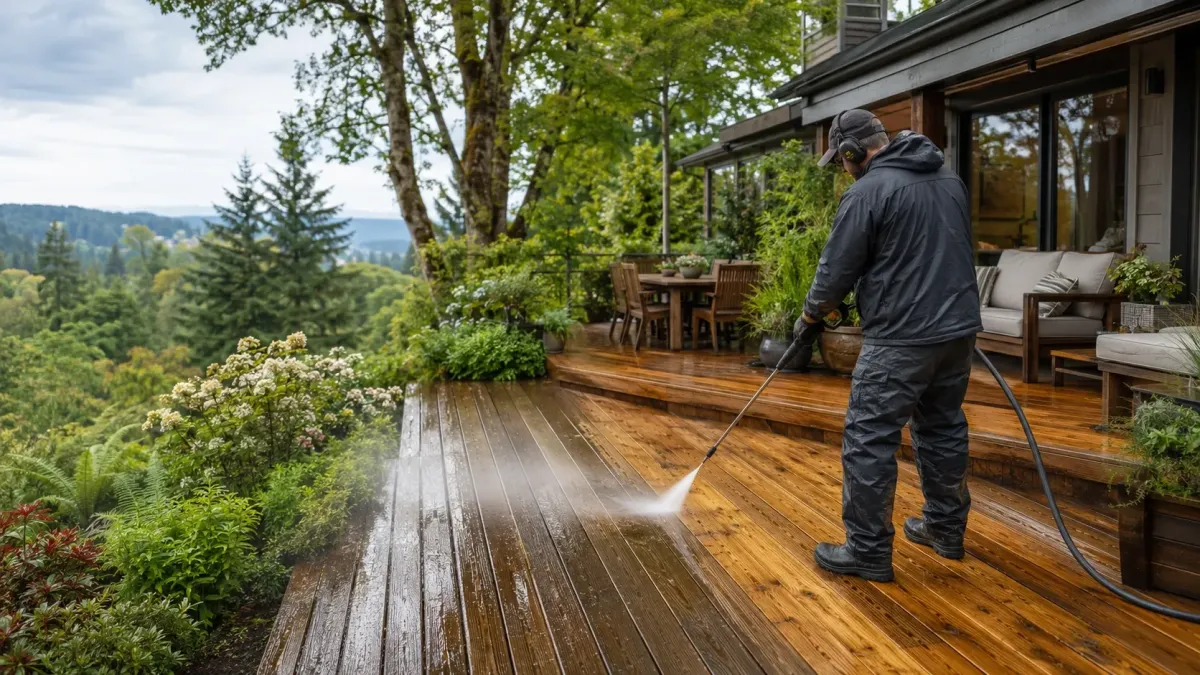
Deck and fence cleaning at a pressure the boards can actually take.
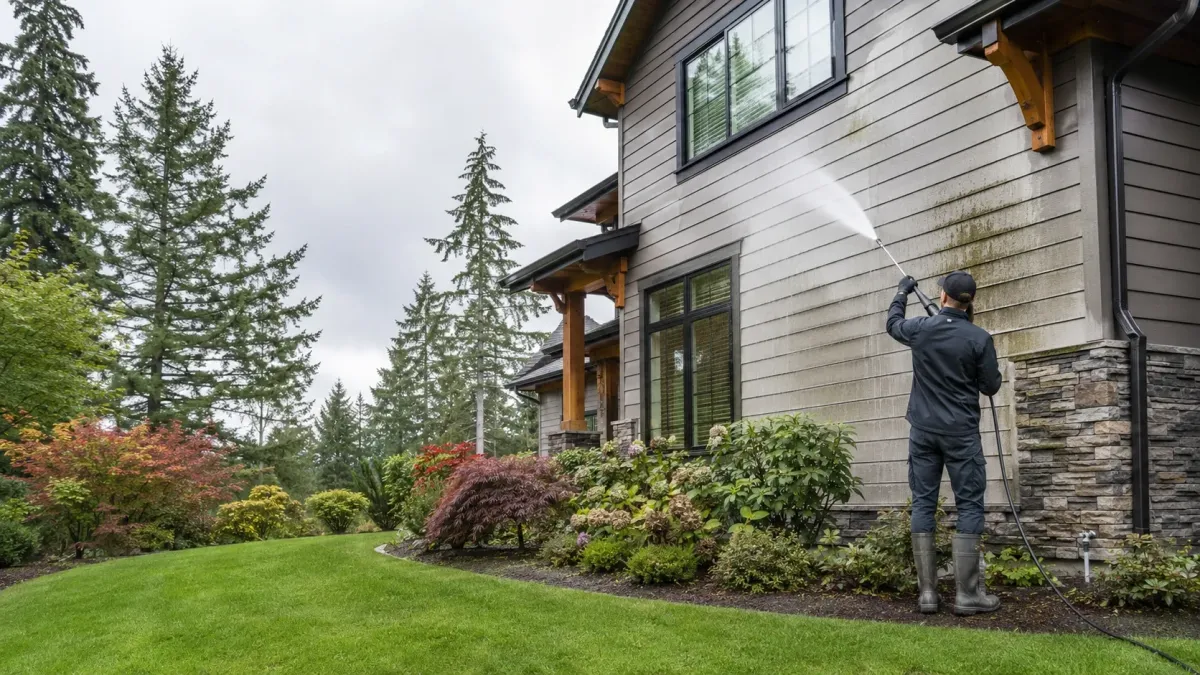
Whole-house exterior washing at low pressure, siding, trim, soffits and gutters outside.
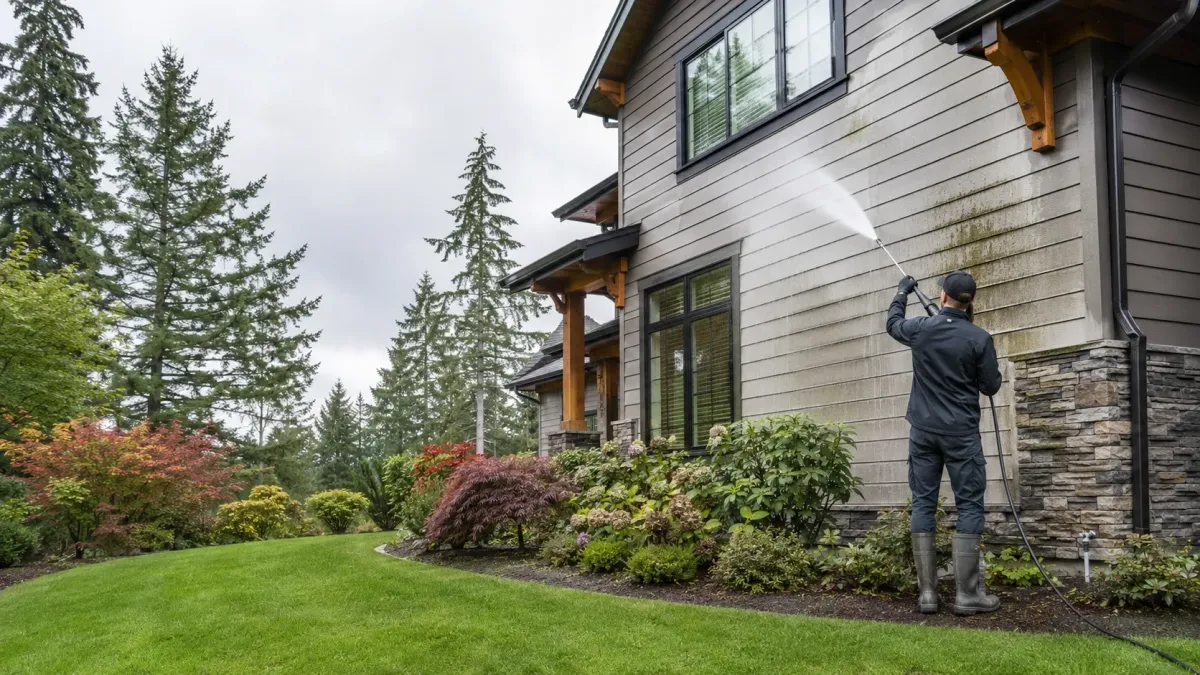
Low-pressure cleaning for surfaces that pressure would strip, mark or soak.
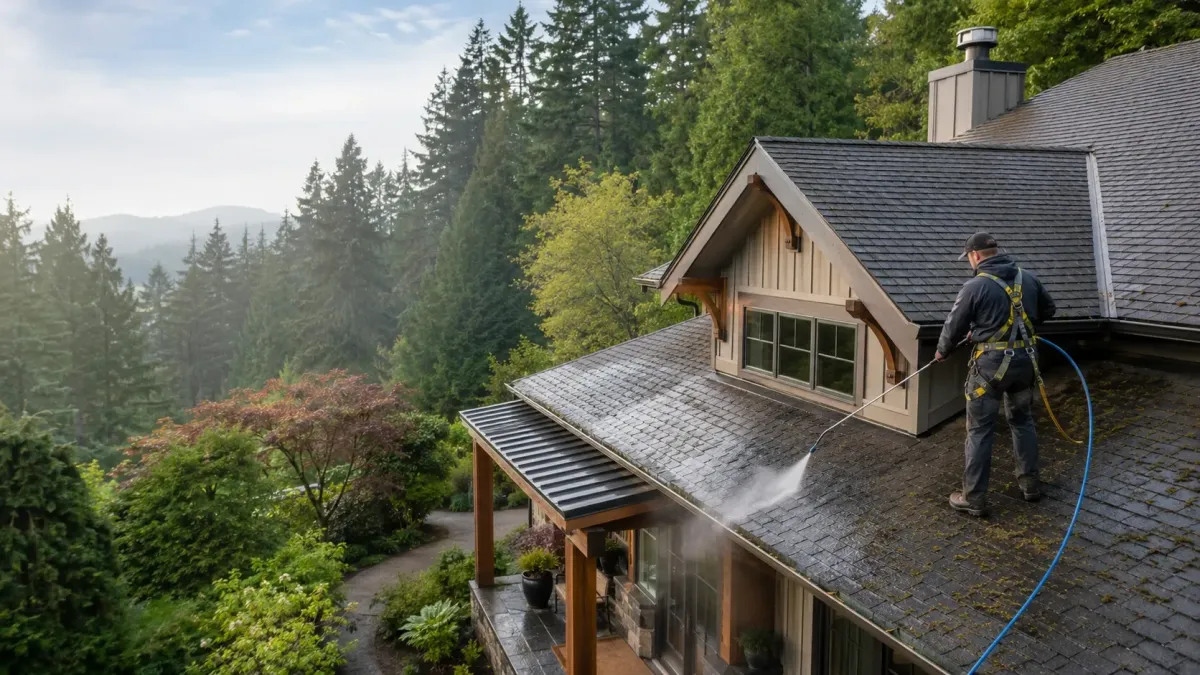
Low-pressure roof cleaning that clears growth without disturbing the shingle surface.
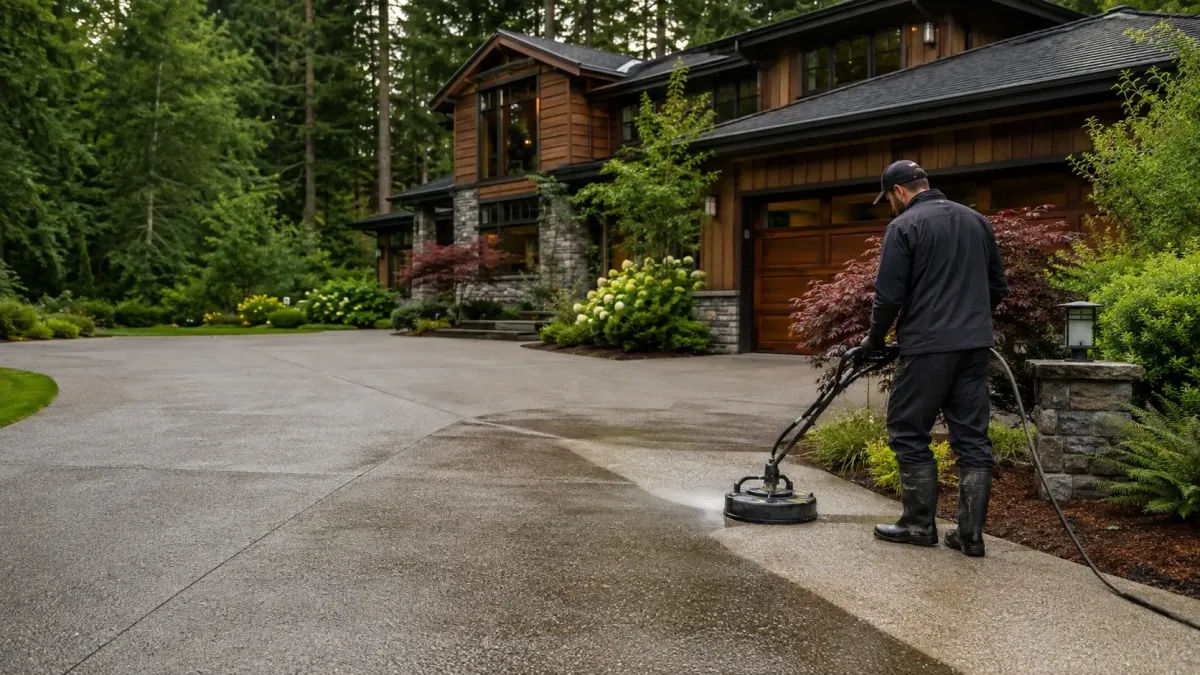
Whole-property exterior cleaning scoped and sequenced one surface at a time.
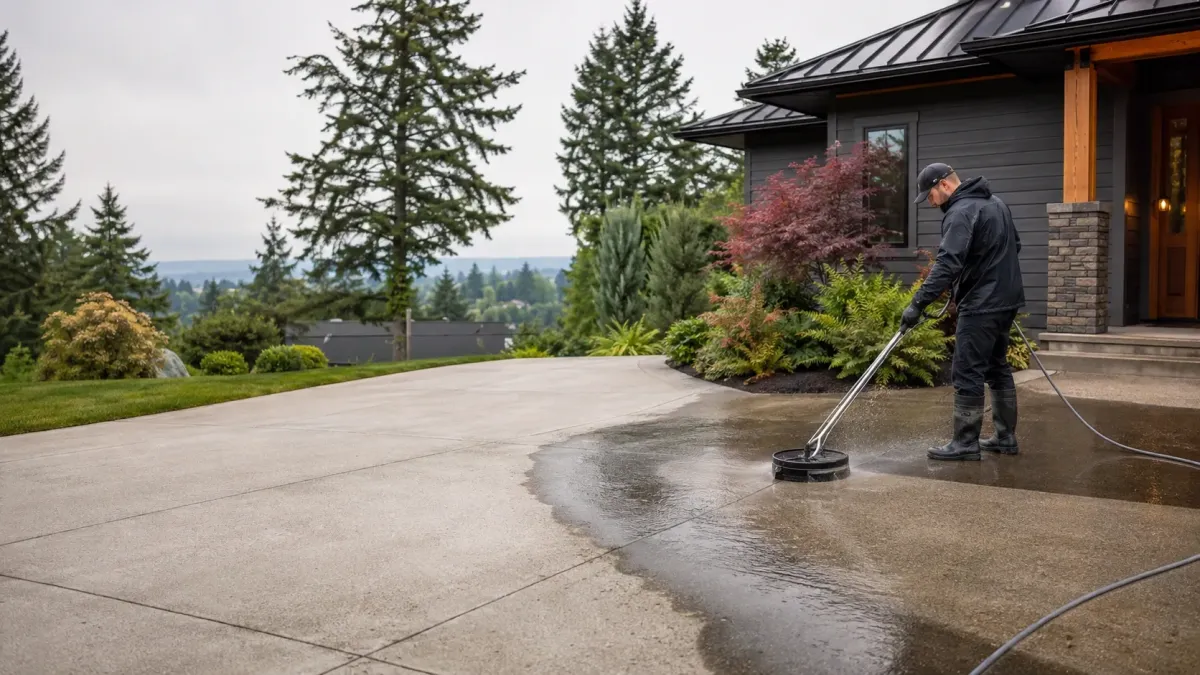
Even driveway cleaning without the striping a narrow wand tip leaves behind.
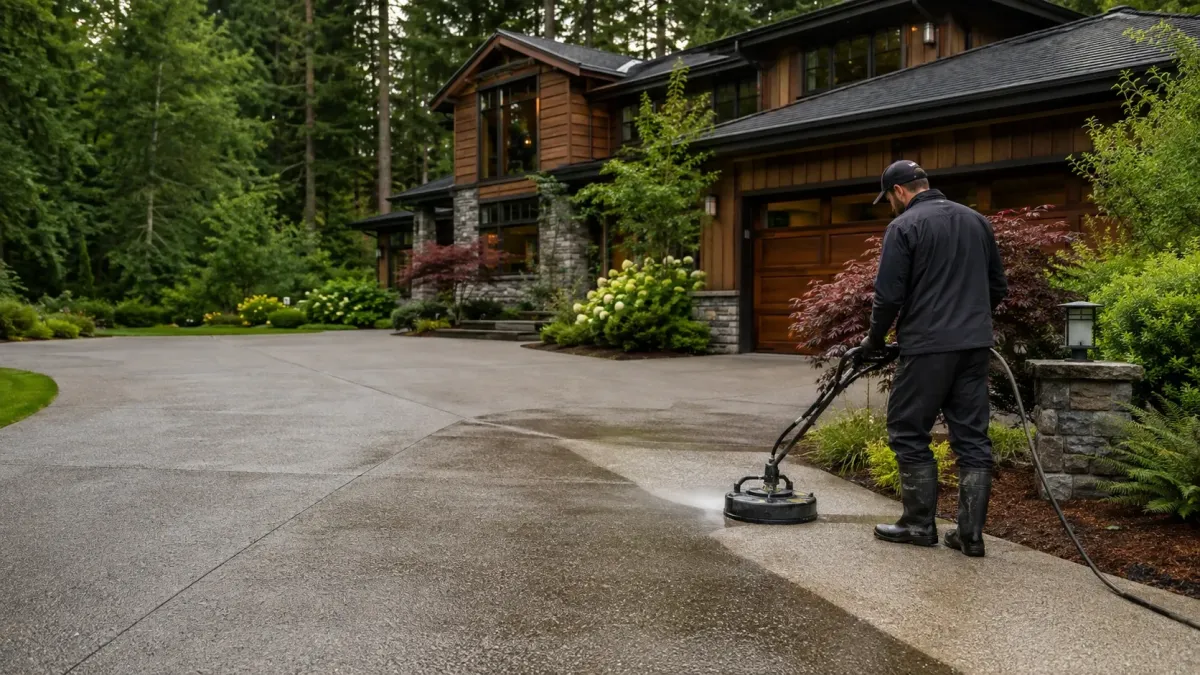
Concrete flatwork cleaned evenly, with staining treated rather than simply blasted.

Communities We Clean Beyond Gresham
Exterior cleaning for Gresham homes and storefronts, done from here
Our service area runs from the Sandy River west into Gresham and south toward the Clackamas County line. Each of these communities handles permits, water and stormwater differently, and several sit in conditions that change the work outright. Gorge wind drives grit onto hard surfaces in one direction; steep parcels change where wash water goes in another.
Frequently Asked Questions
Pressure Washing can be complex, and we’re here to provide answers to common questions. Here are some frequently asked questions from our clients.
Frequently Asked Questions about pressure washing gresham or
How much does pressure washing cost in Gresham, OR?
There is no single price, because the surface decides the job more than the square footage does. A flat concrete driveway cleaned with a surface cleaner and a two-storey siding wash that needs low pressure, a cleaning solution and ladder access are different amounts of work. Access matters too, since a fenced back patio takes longer to reach than a front walkway. We walk the property, quote by surface, and give you the number before anything gets scheduled.
Is soft washing or pressure washing better for Pacific Northwest siding?
Soft washing, in almost every case. Siding in this climate is dealing with algae and moss growth rather than baked-on dirt, and growth comes off chemically rather than mechanically. Direct pressure on lap siding drives water behind the boards and can strip paint on older trim. Low pressure with a cleaning solution removes the growth at the root, which is also why it stays clean longer.
What is the best month to pressure wash a house in Gresham?
Spring and early autumn, not midsummer. March through May clears the growth that built up over a wet winter, and September through October gets surfaces clean before the rain returns and gives moss something to sit in. Summer feels like the obvious window because it is dry, but by then the growth has had months to establish. Most properties here do best on two visits a year rather than one.
Will pressure washing damage old concrete or painted siding?
It can, and that is the whole reason the method gets decided before we start. Older concrete, particularly driveways poured decades ago with surface aggregate already exposed, will etch under a narrow-tip wand held too close. Painted siding and older wood trim will lift. We use a surface cleaner on flatwork so the pressure spreads evenly, and low pressure on anything painted or wooden.
How long does pressure washing last before moss comes back in Oregon?
It depends almost entirely on shade and drainage. A south-facing driveway in full sun can stay clean the better part of a year. The same concrete under fir canopy, or a north-facing wall that never dries out, will start greening again within a few months. Where a soft wash was used with a cleaning solution the growth takes noticeably longer to return, because the roots came off rather than just the surface.
Do you need a permit or wastewater containment to pressure wash a commercial property in Gresham?
Commercial work brings requirements that residential jobs usually do not, and they turn on where the wash water ends up. A lot draining to a storm inlet is treated differently from one draining to landscaping, and cleaning that lifts oil or paint residue changes what can be allowed to run off. We sort the containment and disposal question out with the property manager before the job is scheduled rather than on the morning of.
Frequently Asked Questions about Deck and Fence Cleaning
Can pressure washing damage a wood deck?
Yes, easily, and it is the most common exterior cleaning damage we see. Direct pressure tears the surface fibres of softwood, and the deck dries rough and splintery rather than smooth. Damp boards, which is most boards here for most of the year, are softer and tear more readily. Deck cleaning should run at low pressure with a cleaning solution doing the lifting.
Is composite decking cleaned the same way as wood?
Same low-pressure principle, different reasons. Composite will not raise a grain, but a concentrated tip can leave permanent marks on the surface, and the growth sits down in the embossed texture rather than on top of it. That means a solution that gets into the texture and lifts the algae out, rather than a pass that cleans the high points and leaves the pattern green.
Should I clean the deck before staining it?
Always, and the sequence matters more than people expect. Stain applied over algae or a grey oxidised surface bonds to that layer instead of to the wood, and it fails early. The other half is drying time. Boards need to be genuinely dry through before any coating goes on, which in a damp season means allowing several days between the wash and the stain.
Can you clean both sides of a fence?
Yes, where access allows, and it is worth doing together. The side that gets less sun is almost always the mossier one, and cleaning only the side you see leaves the growth to spread straight back through. If the far side belongs to a neighbour we will need that arranged before the visit, so mention it when you book.
Book Deck Cleaning in Gresham
What Our Satisfied Clients Have to Say About
We pride ourselves on delivering great results and experiences for each client. Hear directly from home and business owners who’ve trusted us with their Pressure Washing needs.
The Trusted Pressure Washing Expert Near You
Ready to hear more about expert services at ?
Contact us today to receive a detailed, no-obligation quote.


