Concrete Cleaning in Gresham, OR
Walkways, Steps, Pads and Commercial Flatwork
Concrete cleaning covers everything flat that is not a driveway: front walkways, steps, back patios, shop and equipment pads, side paths, and the flatwork around commercial buildings. The surfaces vary but the discipline is the same, which is identifying what the staining actually is before deciding how to attack it. Three things stain concrete around here and they need three different responses. Organic growth, the green and black that appears along edges and anywhere shaded, comes off with the general clean. Oil and grease, common on shop pads and around commercial service areas, needs a degreaser applied and left to work before any pressure, because pressure alone drives it deeper into a porous slab. Rust, from metal furniture, downspout fixings or fertiliser, does not respond to either and needs a specific treatment. Blasting a rust stain harder simply erodes the concrete around it and makes the mark more obvious. The light industrial stretches along Powell Boulevard produce more of the second and third than a residential street does. Steps deserve a specific mention, since they are the surface where growth is most dangerous and most often left. A shaded set of front steps develops a film that is genuinely slick by midwinter, and it is the one piece of concrete on most properties worth cleaning for reasons other than appearance.
We identify what the staining is on arrival and treat the categories separately rather than running one pass over everything. Oil gets a degreaser and dwell time first, rust gets its own treatment, and the general growth comes off with the main clean. Overlapping passes keep the finish even. Where a slab would genuinely hold up better sealed after cleaning we will say so, and where sealing would trap moisture in an old slab we will say that too.

What's Included in our Concrete Cleaning service?
Stain Type Identification
Separates organic growth, oil and rust because each needs a different treatment.
Even-Pass Cleaning
Runs the surface cleaner in overlapping passes so no striping is left behind.
Post-Clean Sealing Advice
Identifies whether sealing after cleaning would actually help this slab.
Proudly serving Gresham, Troutdale, Fairview, Wood Village, Happy Valley and Damascus for years.
Comprehensive Pressure Washing Services in Gresham
Tailored to Your Needs
Every job starts with one question: what can this surface take. Concrete, pavers and stone handle direct pressure and clean up fast with a surface cleaner. Siding, roofing, painted trim and older wood take a low-pressure application instead. Most properties need both methods in different places, which is why we quote by surface.
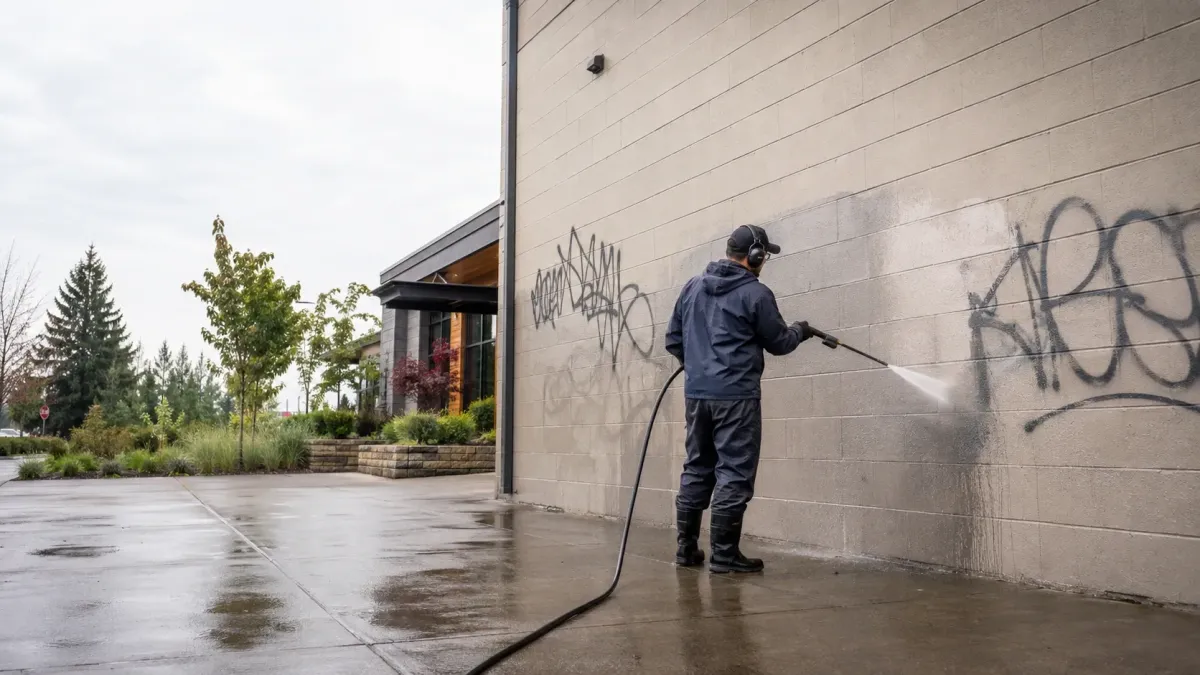
Tag removal matched to the substrate so the wall does not end up two-toned.
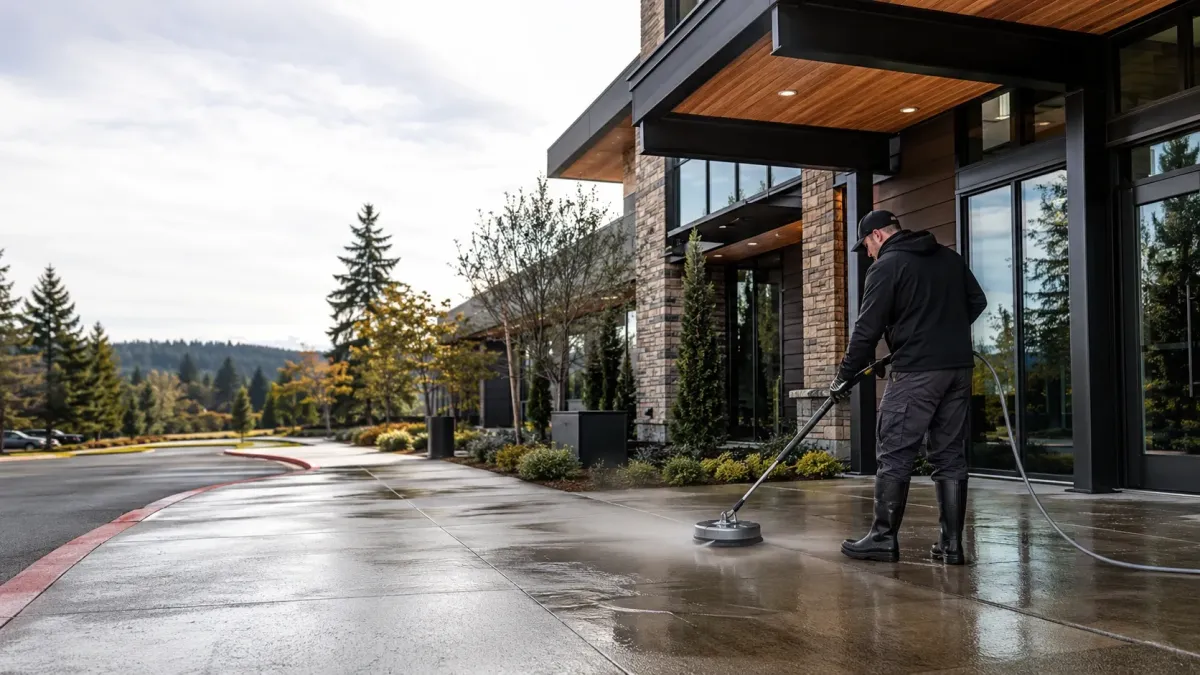
Scheduled exterior cleaning for commercial property, worked around your trading hours.
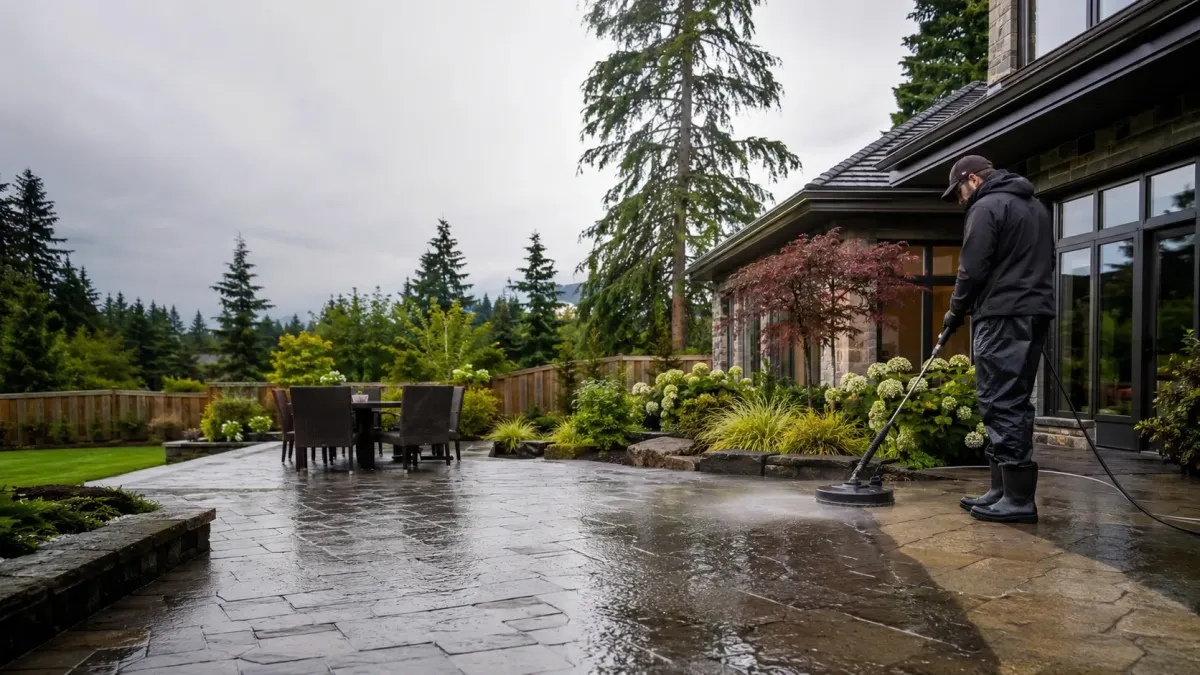
Paver and patio cleaning that clears the joints without washing the bedding out.
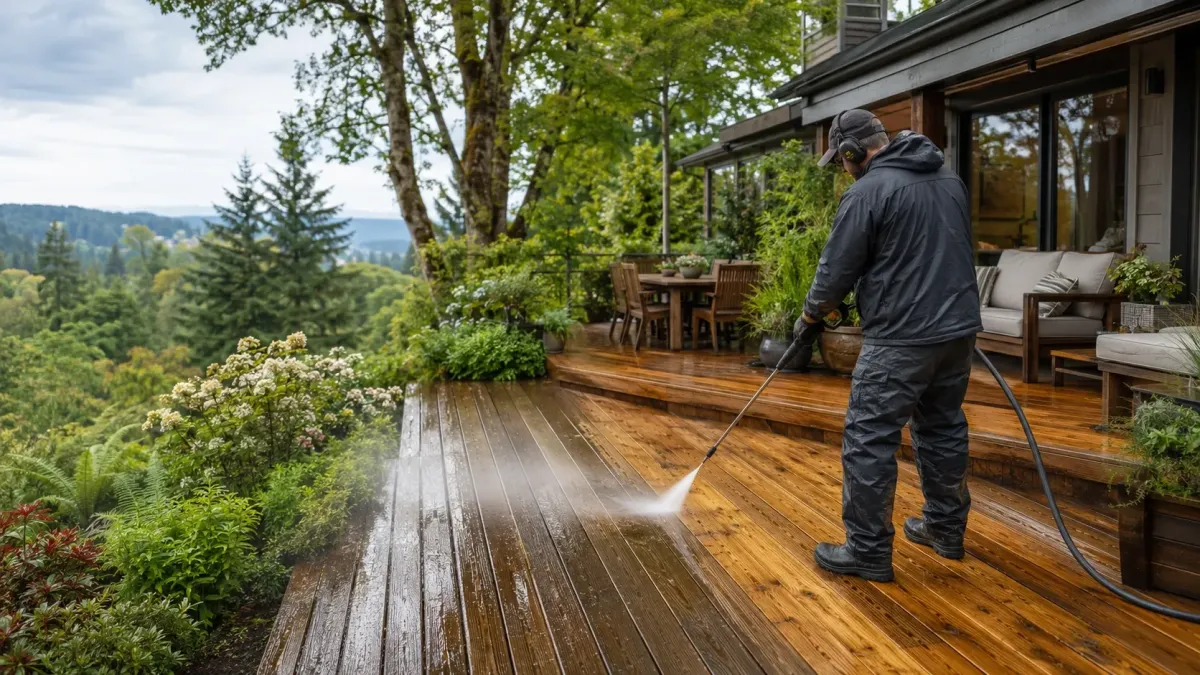
Deck and fence cleaning at a pressure the boards can actually take.
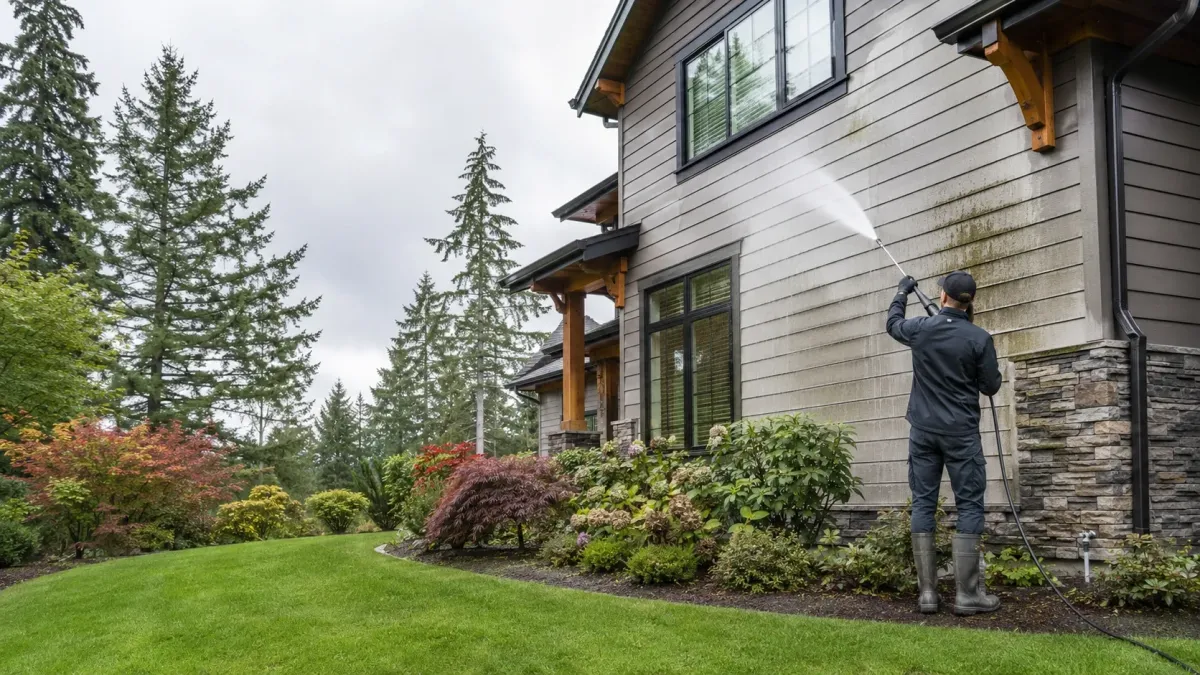
Whole-house exterior washing at low pressure, siding, trim, soffits and gutters outside.
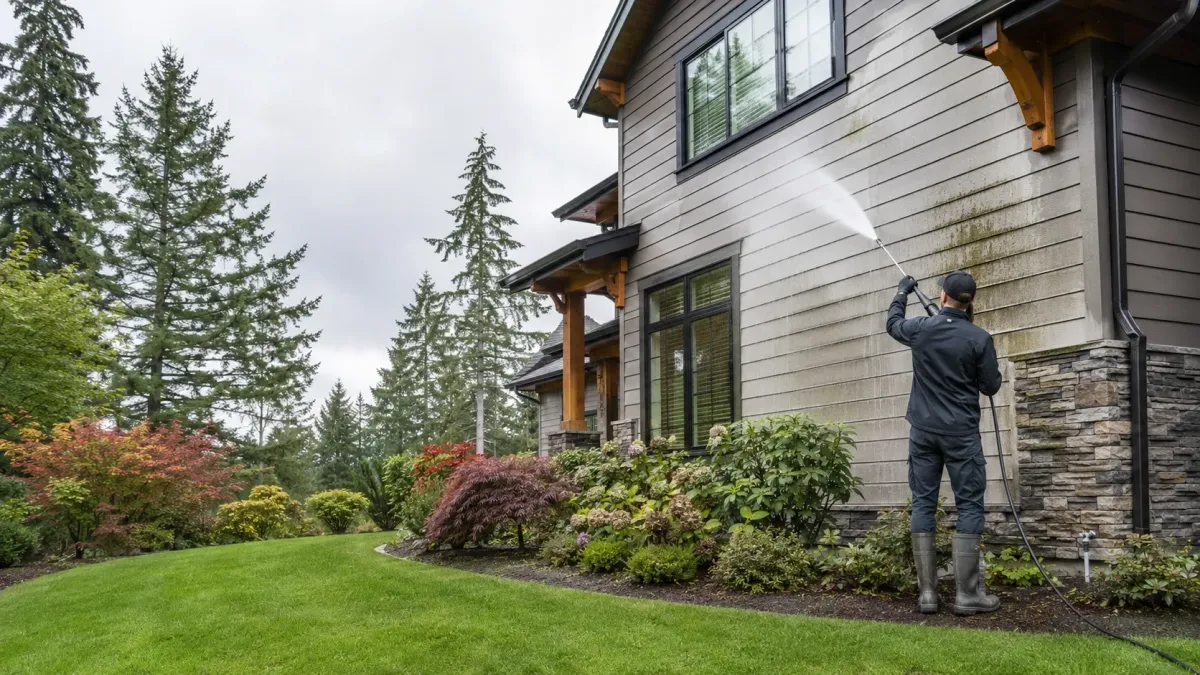
Low-pressure cleaning for surfaces that pressure would strip, mark or soak.
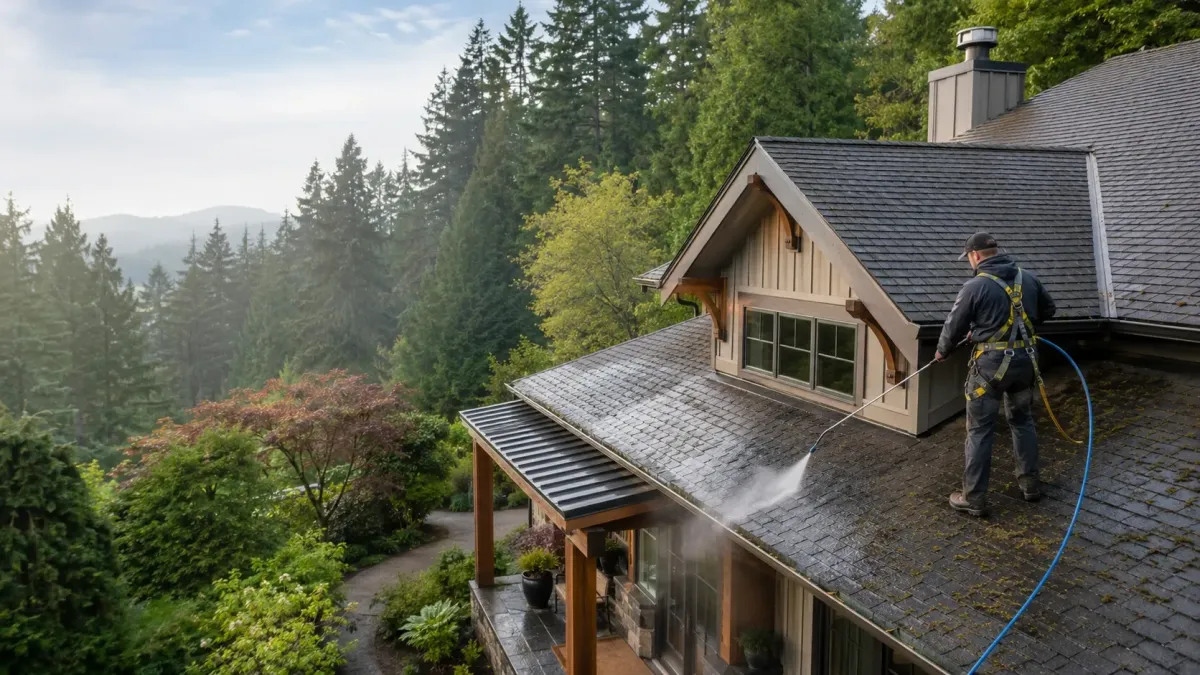
Low-pressure roof cleaning that clears growth without disturbing the shingle surface.
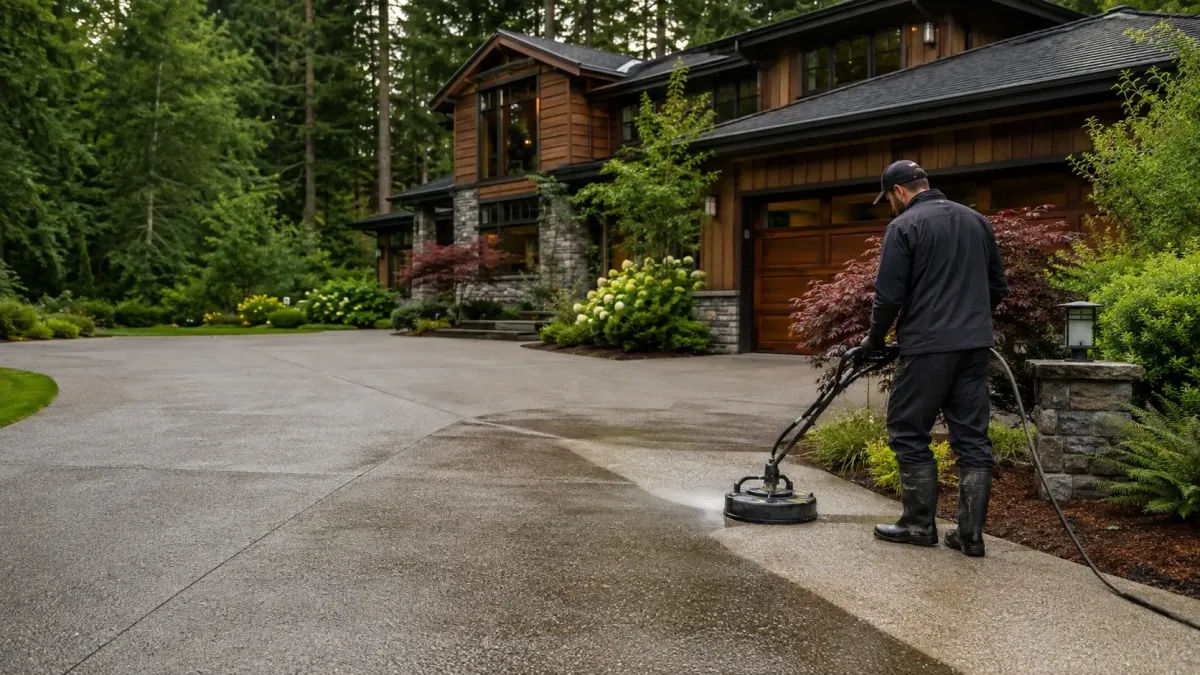
Whole-property exterior cleaning scoped and sequenced one surface at a time.
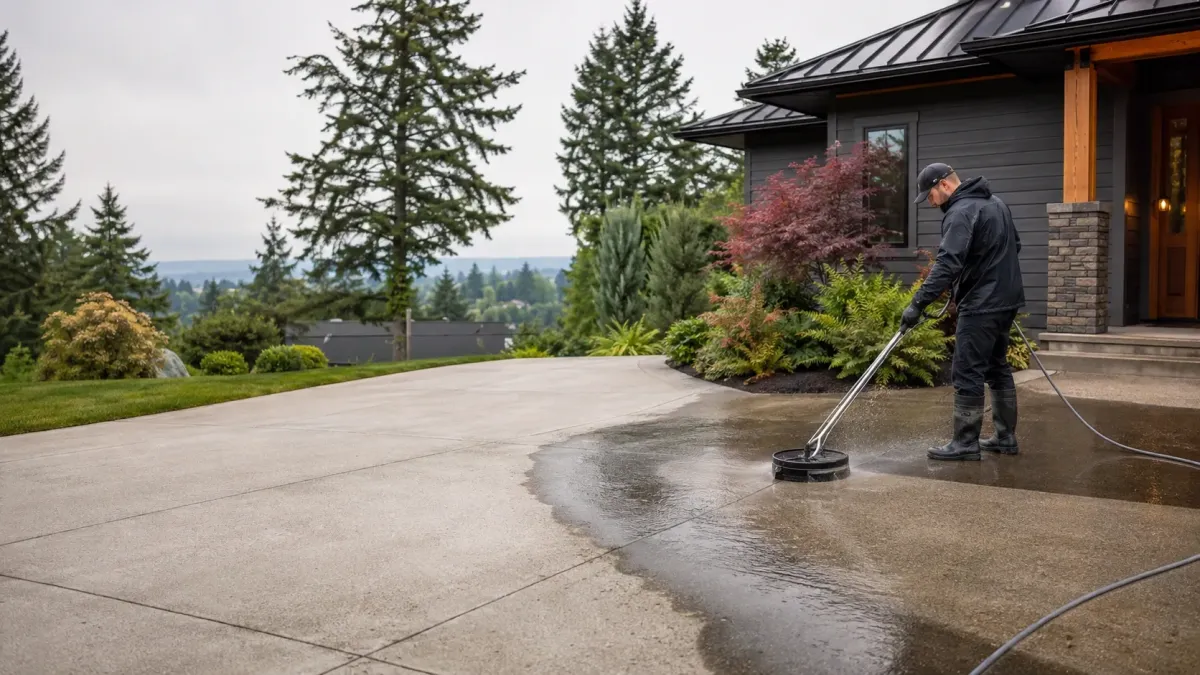
Even driveway cleaning without the striping a narrow wand tip leaves behind.
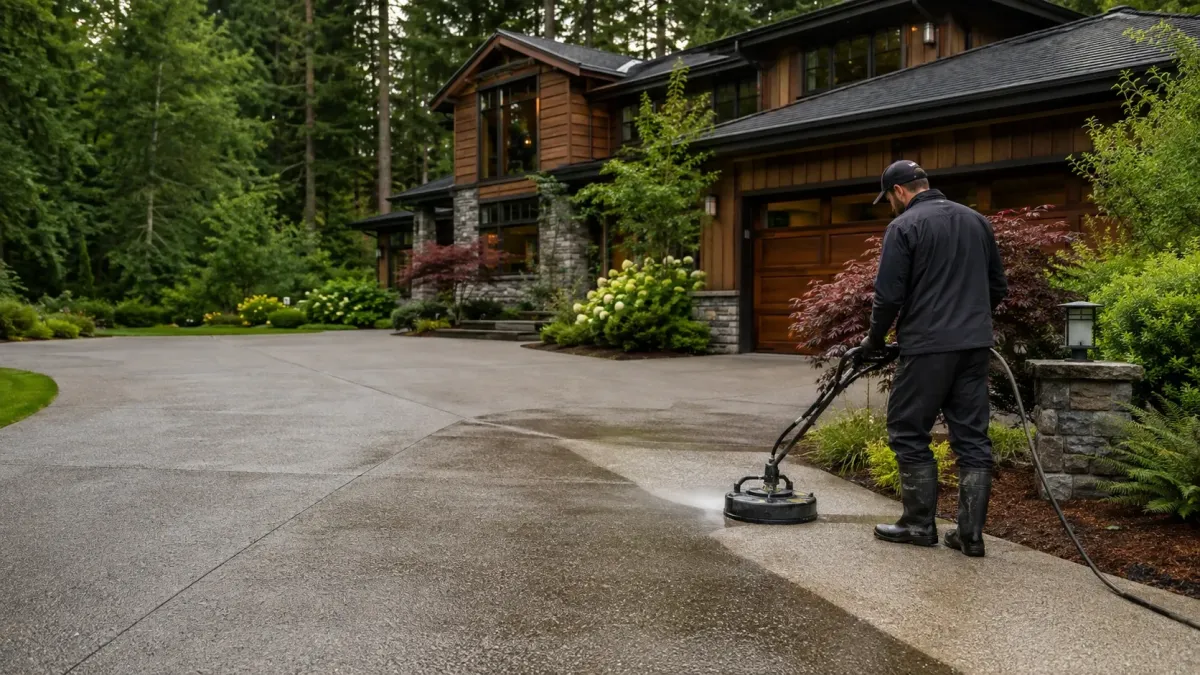
Concrete flatwork cleaned evenly, with staining treated rather than simply blasted.
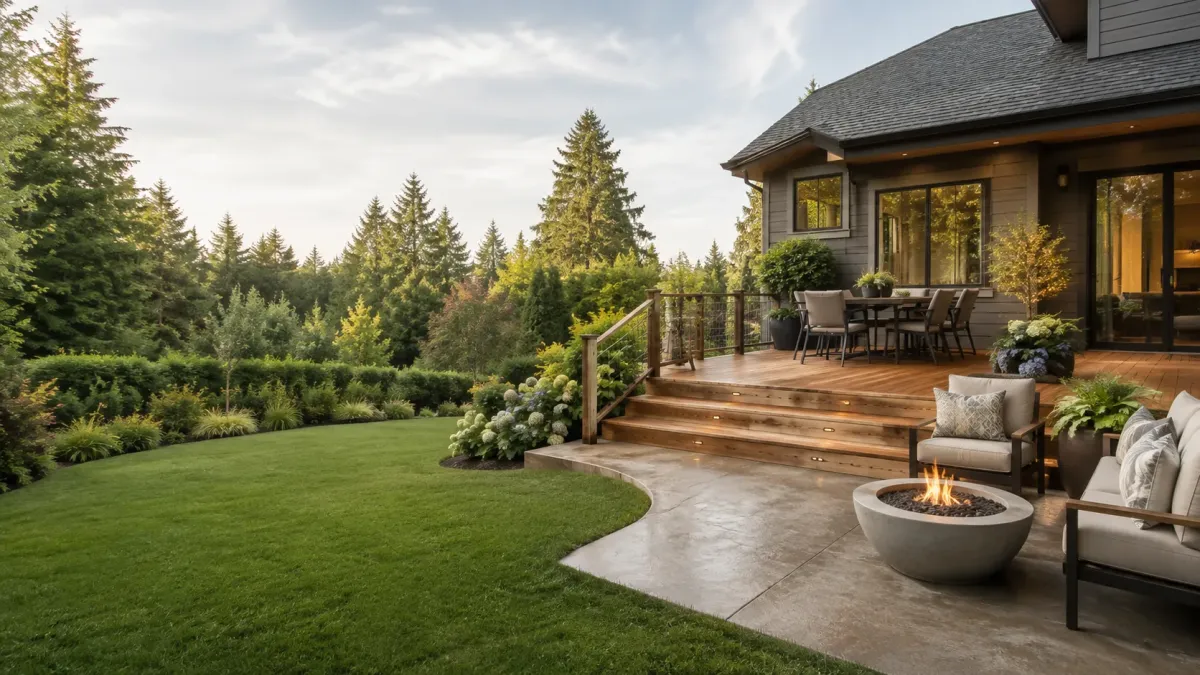
Communities We Clean Beyond Gresham
Exterior cleaning for Gresham homes and storefronts, done from here
Our service area runs from the Sandy River west into Gresham and south toward the Clackamas County line. Each of these communities handles permits, water and stormwater differently, and several sit in conditions that change the work outright. Gorge wind drives grit onto hard surfaces in one direction; steep parcels change where wash water goes in another.
Frequently Asked Questions
Pressure Washing can be complex, and we’re here to provide answers to common questions. Here are some frequently asked questions from our clients.
Frequently Asked Questions about pressure washing gresham or
How much does pressure washing cost in Gresham, OR?
There is no single price, because the surface decides the job more than the square footage does. A flat concrete driveway cleaned with a surface cleaner and a two-storey siding wash that needs low pressure, a cleaning solution and ladder access are different amounts of work. Access matters too, since a fenced back patio takes longer to reach than a front walkway. We walk the property, quote by surface, and give you the number before anything gets scheduled.
Is soft washing or pressure washing better for Pacific Northwest siding?
Soft washing, in almost every case. Siding in this climate is dealing with algae and moss growth rather than baked-on dirt, and growth comes off chemically rather than mechanically. Direct pressure on lap siding drives water behind the boards and can strip paint on older trim. Low pressure with a cleaning solution removes the growth at the root, which is also why it stays clean longer.
What is the best month to pressure wash a house in Gresham?
Spring and early autumn, not midsummer. March through May clears the growth that built up over a wet winter, and September through October gets surfaces clean before the rain returns and gives moss something to sit in. Summer feels like the obvious window because it is dry, but by then the growth has had months to establish. Most properties here do best on two visits a year rather than one.
Will pressure washing damage old concrete or painted siding?
It can, and that is the whole reason the method gets decided before we start. Older concrete, particularly driveways poured decades ago with surface aggregate already exposed, will etch under a narrow-tip wand held too close. Painted siding and older wood trim will lift. We use a surface cleaner on flatwork so the pressure spreads evenly, and low pressure on anything painted or wooden.
How long does pressure washing last before moss comes back in Oregon?
It depends almost entirely on shade and drainage. A south-facing driveway in full sun can stay clean the better part of a year. The same concrete under fir canopy, or a north-facing wall that never dries out, will start greening again within a few months. Where a soft wash was used with a cleaning solution the growth takes noticeably longer to return, because the roots came off rather than just the surface.
Do you need a permit or wastewater containment to pressure wash a commercial property in Gresham?
Commercial work brings requirements that residential jobs usually do not, and they turn on where the wash water ends up. A lot draining to a storm inlet is treated differently from one draining to landscaping, and cleaning that lifts oil or paint residue changes what can be allowed to run off. We sort the containment and disposal question out with the property manager before the job is scheduled rather than on the morning of.
Frequently Asked Questions about Concrete Cleaning
What is the difference between concrete cleaning and driveway cleaning?
Mostly the surface, not the method. Driveways are the largest single slab on most properties and carry vehicle staining, so they get their own page. Concrete cleaning covers walkways, steps, patios, pads and commercial flatwork. The same surface cleaner and the same stain-by-stain approach applies to both.
Can you remove rust stains from concrete?
With the right treatment, usually. Rust does not respond to pressure or to the solutions that clear organic growth, and increasing the pressure only erodes the surrounding surface and makes the stain more visible against clean concrete. It needs a specific rust treatment applied to the stain. Older, deeper marks may lighten rather than clear completely.
Should concrete be sealed after cleaning?
Sometimes, and it depends on the slab. A sound surface in reasonable condition holds its clean longer sealed, and staining is easier to remove next time. An older slab that is already absorbing and releasing moisture can be made worse by sealing, since the seal traps what is coming up from below. We look at the concrete and tell you which situation yours is.
Do you clean commercial concrete and shop pads?
Yes, and they usually need degreasing rather than just washing. Oil and grease on a pad have to be lifted with a degreaser and dwell time before pressure, or the pressure drives them further into the slab. Where the runoff from that would reach a storm inlet, the containment question gets settled before the work is scheduled.
Book Concrete Cleaning in Gresham
What Our Satisfied Clients Have to Say About
We pride ourselves on delivering great results and experiences for each client. Hear directly from home and business owners who’ve trusted us with their Pressure Washing needs.
The Trusted Pressure Washing Expert Near You
Ready to hear more about expert services at ?
Contact us today to receive a detailed, no-obligation quote.


